Healing the Inner Man: Scripture, Saints, and the Sacramental Path to Wholeness
Healing the Inner Man: Scripture, Saints, and the Sacramental Path to Wholeness
In the Name of the Father, and the Son, and the Holy Spirit, One God. Amen.
May the blessing of the Father who calls us and His Only Begotten Son Jesus Christ who saves us,
and the Holy Spirit who sanctifies and transforms us be with us all,
that we may hear His word and bear fruit—thirty, sixty, and a hundredfold. Amen.
Introduction: Salvation as Healing, Not Mere Survival
One of the greatest misunderstandings of modern Christian life is that faith is about surviving sin, while mental health is about surviving life. The Orthodox Church has never made this division. From the very beginning, salvation was understood as healing, not merely forgiveness; restoration, not merely endurance.
When our Lord Jesus Christ healed the sick, cast out demons, and restored the broken, He was not performing isolated miracles. He was revealing the true purpose of salvation: to restore the human person in body, soul, mind, and spirit. The Church continues this healing ministry through Scripture, ascetic struggle, community, and above all, the sacramental life.
The Bible and the lives of the saints are not stories of perfect people; they are stories of wounded people who encountered God and were transformed. These stories speak powerfully today to anxiety, despair, trauma, burnout, shame, identity confusion, and relational brokenness.
Part One: The Old Testament: God Heals Before He Commands
Point One: Elijah: The Prophet Who Wanted to Die (1 Kings 19)
After a great spiritual victory on Mount Carmel, the prophet Elijah collapses emotionally. He flees, isolates himself, and prays:
“It is enough! Now, LORD, take my life” (1 Kings 19:4, NKJV).
This is not rebellion. This is emotional exhaustion.
Notice God’s response. He does not correct Elijah. He does not rebuke him. He does not preach to him.
He feeds him.
He lets him sleep.
He gently speaks.
Only after Elijah is physically and emotionally restored does God reorient his mission.
Mental Health Insight: Burnout often follows spiritual intensity. Elijah teaches us that emotional collapse does not negate holiness. God treats exhaustion before expectation.
For Families: Learn to recognize when behavior is rooted in exhaustion rather than disobedience.
For Youth: Feeling overwhelmed does not mean you lack faith.
For Servants: Ministry without rest leads to distortion of God’s voice.
Point Two: Hannah: Silent Tears and the Birth of Hope (1 Samuel 1)
Hannah suffers infertility, public shame, and constant provocation. Scripture tells us:
“She was in bitterness of soul, and prayed to the LORD and wept in anguish” (1 Samuel 1:10, NKJV).
Her pain is invisible to others, even misunderstood by Eli the priest. Yet God sees her interior suffering.
Her healing does not come instantly, but through pouring out her soul before God.
Mental Health Insight: Naming pain before God is not weakness; it is integration. Hannah models healthy emotional expression within faith.
For Families: Create spaces where emotions are not spiritualized away.
For Youth: God honors silent struggles.
For Servants: Do not rush people out of grief.
Part Two: The New Testament: Christ Heals the Whole Person
Point Three: The Paralytic: Forgiveness Before Mobility (Mark 2:1–12)
Jesus first says:
“Son, your sins are forgiven you” (Mark 2:5, NKJV).
Only afterward does He heal the body.
This order is essential. The man’s greatest paralysis was not physical but internal shame and spiritual burden.
Mental Health Insight: Many symptoms persist because inner wounds remain untouched. Healing often begins with restored identity, not behavior change.
For Families: Avoid reducing problems to performance.
For Youth: Your worth is not measured by productivity.
For Servants: Healing ministries must address the soul.
Point Four: The Samaritan Woman: Trauma Meets Truth (John 4)
Christ does not shame her history. He reveals it gently. Her transformation happens when truth meets compassion.
“Come, see a Man who told me all things that I ever did” (John 4:29, NKJV).
She moves from isolation to mission.
Mental Health Insight: Healing occurs when people feel seen without being condemned. This is trauma-informed ministry long before modern psychology.
Part Three: The Saints: Healing Through Struggle, Not Escape
Paradise of the Fathers repeatedly shows us that holiness is forged through inner battles.
Point Five: Saint Moses the Strong
A man of violence and addiction, Moses enters the desert carrying deep shame and impulsivity. His transformation is slow and filled with relapses.
When asked why he remains in the desert, he responds:
“I have not yet learned to conquer my thoughts.”
Mental Health Insight: Spiritual growth includes emotional regulation, impulse control, and self-awareness.
Point Six: Saint Mary of Egypt
Her repentance was not a moment but a lifetime process. Isolation did not erase her wounds; grace transformed them.
For Youth: Your past does not disqualify your future.
For Families: Change takes time.
For Servants: Avoid expecting instant sanctity.
Part Four: Mental Health and Orthodox Anthropology
Orthodoxy understands the human person as unified, not fragmented. The Church Fathers spoke of:
• Disordered thoughts (logismoi)
• Wounded desires
• Fear and despair as spiritual illnesses
Modern mental health names these realities differently, but the goal is the same: restoration of inner harmony.
Healthy spiritual life includes:
• Emotional awareness
• Boundaries
• Community
• Confession
• Eucharistic healing
Part Five: The Sacramental Life: The Hidden Source of Healing
True success in Christian life is impossible without sacramental grounding.
Confession
Confession restores narrative coherence. Shame loses its power when spoken in truth.
Eucharist
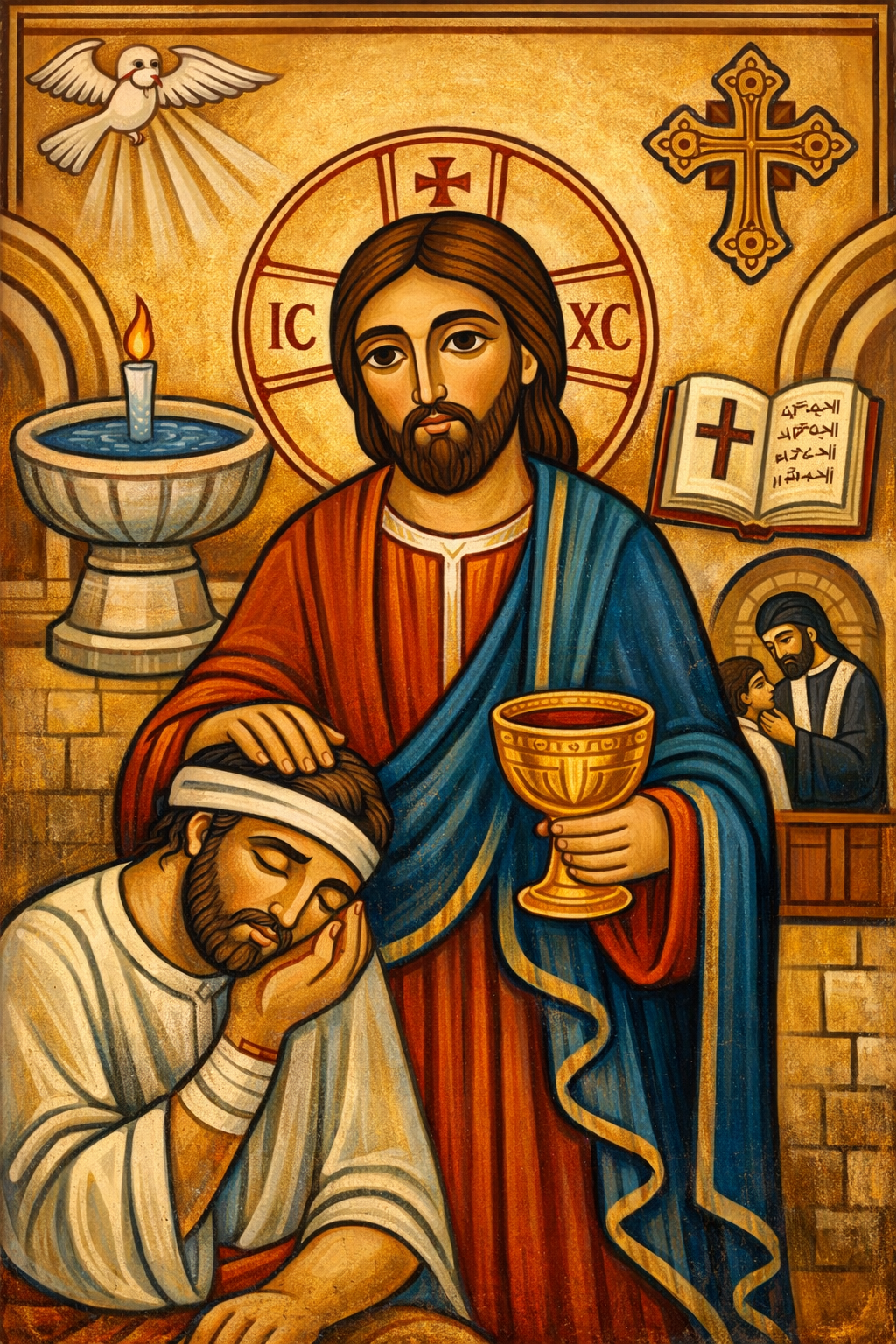
The Eucharist is not symbolic comfort. It is union with the Healer Himself.
“He who eats My flesh and drinks My blood abides in Me, and I in him” (John 6:56, NKJV).
Unction of the Sick
Unction of the Sick addresses psychological and emotional wounds, not only physical illness.
Practical Implementation
For Families
• Normalize emotional conversations
• Attend confession together
• Model repentance, not perfection
For Youth
• Teach discernment of thoughts
• Encourage spiritual direction
• Integrate faith with emotional honesty
For Servants
• Practice self-care without guilt
• Seek supervision and confession
• Remember: you are a vessel, not the Savior
Conclusion: Wholeness Is the Goal
The Church does not promise a pain-free life. She promises a healed life.
Through Scripture, the saints, mental awareness, and the sacraments, we are not merely coping; we are being transformed.
“Beloved, I pray that you may prosper in all things and be in health, just as your soul prospers” (3 John 1:2, NKJV).
May the Lord bless us, transform our hearts and minds, that our homes may stand on the Rock, our hands serve in the harvest, and our hearts long for Heaven. Amen.